
GSAL Economics Society
Editor’s note: This collection of insightful essays represents considerable time and effort from passionate, engaging members of GSAL’s student-led Economics Society. The student authors wrote these essays during their time in Year 12; they are all now in Year 13. The essays include:
Some claim that modern communication platforms, such as Zoom, and the work-from-home revolution will lead to a decline of inner cities. Do you agree? (Dhruv, Year 12)
The essay discusses the rise of the work-from-home revolution driven by technological advancements such as high-speed internet, communication platforms, and cloud computing, and explores its impact on inner cities. It highlights both the benefits of remote work and the challenges it poses to urban centers.
Should developing economies prioritise environmental sustainability over economic growth? (Rehan, Year 12)
Developing economies face a critical decision between prioritizing immediate economic growth or long-term environmental sustainability. The document discusses the challenges and trade-offs involved in this choice, emphasizing the impacts of climate change and the need for sustainable development.
The current Conservative government led by Rishi Sunak has unexpectedly decided to scrap part of the HS2 project. Irrespective of your overall political views towards the current government, do you think this was a sound decision from an economic point of view? (Rehan, Year 12)
The UK Conservative government led by Rishi Sunak decided to scrap most of Phase 2 of the HS2 rail project, citing economic and practical concerns. This decision is analyzed in terms of costs, benefits, and alternatives in the context of the UK’s evolving rail transport needs.
How could the 2008 financial crisis have been avoided? (Pranav & Nayonika, Year 12)
The 2008 Financial Crisis was a global economic disaster triggered by risky lending and a housing bubble collapse, deeply impacting economies worldwide. This summary explores how government policies and financial practices contributed to the crisis and how it might have been prevented.
Game Theory (Uttam & Nico, Year 12)
Game theory studies strategic decision-making where the choices of one participant affect all involved. It applies to various scenarios like business and geopolitics, focusing on players, strategies, payoffs, and information.
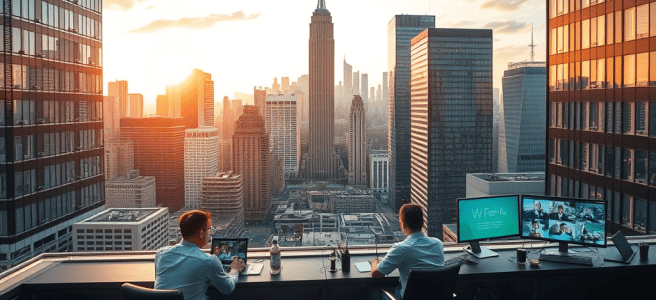
Some claim that modern communication platforms, such as Zoom, and the work-from-home revolution will lead to a decline of inner cities. Do you agree?
Dhruv, Year 12
The work-from-home revolution has risen due to the facilitation, inspiration and tremendous technological advancements; being due to massive improvements in high-speed internet connection, allowing firms and the normal individuals to hold meetings from completely opposite sides of the globe with seamless connection. Furthermore the creation of new communication platforms such as zoom, discord, Microsoft Teams etc. have made online meetings more practical and cost/time effective in comparison to the traditional ‘in person’ meetings.
In addition to this, the progression in what is known today as ‘cloud computing’, which enables people to more effectively save digital files in a virtual space which can be accessed by members of that network from any geographical location; and collaborative tools such as OneNote have empowered remote teams to collaborate and work productively without having to be in person.
The pearls of these technological abilities are obvious, from an employers’ perspective it enhances their ability to expand their firm internationally, with the power to reach out to employees and hire them without having to physically be in an office. This increases a firms employing pool, not being restricted to employing workers from a specific geographical area, but rather having the ability to employ the best workers, regardless of their residence. Furthermore with the world of work entering a digital age, the requirement of a physical office is becoming increasingly redundant. Firms may thus move away from even having an office, not having to pay rent, which would be a massive money saver for firms. Now if we were to look at the positives of the work from home revolution from a more macro scale, the exponential increase in people working from home will in turn reduce the frequency of commutes via vehicles, which will cause a fall in the carbon emissions as less journeys are made using carbon emitting vehicles, which is definitely a tremendous positive when looking from an environmental perspective. This all being possible due to the mass mobilization of workers to working from home. Online working has become so prominent that as of 2023 in the USA 19% of full-time workers work from home, with 29% having a ‘hybrid’ split, meaning their working week is split between online and in-person working (Jose Maria Barrero & Davis, 2023).
However returning to the crux of the question, that being the effect of the work from home revolution on inner cities. First let us understand what inner cities are; this being an area near the centre of a city, consisting of a high density of buildings and a lack of open space, usually areas where firms will have offices and companies will have their shops. However as we have moved into the 21st century, with the population forever growing, inner cities have become characterized as ‘distressed urban environments’ with ‘high concentrations of poverty’ (Leonard E. Egede & Davison, 2021). The influx in those working from home is something that will definitely cause a fall in the necessity of inner cities. Working from home causes a plethora of reasons for why inner cities will deteriorate, these being: it reduces commuting, deterioration of the cultural vibrancy of inner cities, a shift in residency away from cities and ultimately a fall in the economic funding of these areas. This will result in heavy economic implications for towns as with inner cities becoming less of a suburban hub, the financial revenue created by these districts, with its purpose become less valuable.
The expansion of online work has had massive implications of the demand for commuting, such as public transport to and fro inner cities. This being due to the fact that people are spending more time working from home instead of working in an actual office, causing the requirement for public transport into inner cities to fall. So much so that a study done shows that since 2008 urban bus services have fallen by 48% in Britain (How Britain’s bus services have drastically, 2023).The change in lifestyle preferences created by young adults who decide to work from home is driving a demographic shift away from dependence on inner cities and into the suburbs. People are beginning to live on the edges of cities, where the pace of life is slower and where rent and property is cheaper. The current expansion of digitalization acts as a catalyst for this demand, it allows people to work from the comfort of their own homes. A fall in commuting into urban areas will directly cause a decline of inner-cities as a fall in demand to public transport will cause it to disappear, causing inner-cities to become increasingly more isolated. As less people become willing to go into inner cities, there will be a reduction in goods and services being sold in shop situated in the city. With a fall in demand, shops will close, perhaps becoming completely digital, which is increasingly occurring. The necessity and value that inner-cities bring to society will slowly crumble; all being as a result of the work-from-home revolution.
A societal shift away from inner cities will also have a detrimental impact on the economy surrounding these social hubs. The movement away from physical interaction and working from home causes the importance of cities to deteriorate, this ultimately will have and is having negative impacts on the economic prosperity attached with inner-cities. This is due to a fall in firms renting office blocks, as it will become cost effective to move completely digital as a firm, as they would not have to pay rent for occupying an office. On a micro-scale for the firm the transition to be completely online, it is a definite win; however its effect on inner-cities is like a terrible domino effect. If firms move away from inner-cities, workers will have no incentive to go into travel in these areas on a regular basis. Many smaller shops such as cafés thrive off the bustling times of rush-hour, where consumers tend to buy product without rational thought. Without these workers, these small shops lose a massive chunk of their consumers. So much so that they are forced to close down, and relocate. In addition to this, it is a well-known fact that on average the price of accommodation in cities is much higher than anywhere else, many are forced, however, to live in the city for work related reasons. However with a shift away from cities due to the work-from-home revolution and the implementation of apps such as zoom which act as a catalyst for this revolution, rational individuals will definitely move away from the city, as from a financial standpoint, it is the correct move. This possible mass migration which may occur in the future if technology carries on in the trajectory that it is, will cause the deterioration of what we know today as inner-cities.
Inner cities are in the modern day, typically characterized as being areas of high levels of poverty, limited educational opportunities and increased segregation. They have become areas populated with poverty, with a strong division between rich and poor. These social problems are only being exacerbated due to overall economic shift away from cities. The work-from-home revolution has played a direct role in expanding the geographical and economical significance of cities as firms are less dependent of face-to-face working spaces due to the ever-evolving power of online communication. However this move away from urban areas has meant that attention has been directed away from inner-cities. With firms looking outward for employment, there has been a significant fall in the employment opportunities for the more vulnerable and impoverished in society, who tend to live in inner-cities. Gov.uk states that in 2021 4.1% of active people in urban areas are unemployed in comparison to 2.7% in rural areas (Statistical Digest of Rural England, 2023). An obvious spike in unemployment in cities in comparison to other areas is somewhat due to the rise in digitalization which causes the significance of cities to fall. With fewer aspirational employment opportunities for those who live in inner cities, there has been a rise in levels of poverty connoted with urban areas. Furthermore small jobs such as cleaning windows, or security of office building will slowly fade away, these jobs usually being occupied by those living in inner-cities. The issue this has caused is impoverishment and unemployment, many have resorted to violence and drug use, transforming a once prosperous area of cities, into a danger zone, feared and avoided by many. This has become so serious that even in 2008 19% of those living in America’s central cities are poor (Edward L. Glaeser, 2008). Despite the correlation between the work-from-home revolution and a growth in poverty and violence in inner-cities, it is key to understand that this is not the only significant cause of the decline in inner-cities. Other issues must be raised such as significant neglection towards those living in inner-cities from political leaders, also a lack of proper public services to help fund and support the economically disadvantaged in society such as better education or more exposure to job opportunities (Leonard E. Egede & Davison, 2021).
Despite the obvious concern that threaten inner-cities due to the work from home revolution, there is still hope for inner-cities to survive, or perhaps even prosper. Currently inner-cities act as a physical hub for businesses, markets and shops. However the detraction away from inner-cities, may be the perfect opportunity to revitalize inner cities. If commercial spaces are repurposed for mixed use development, affordable housing, or community spaces. It is definitely possible to repurpose inner-cities in a more sustainable and diverse urban environment, which complements the requirements of a growing digital age.
The work-from-home revolution has heavily been driven by the take-off of digital automation and online dominance in the world. We, of the modern age, can communicate, collaborate, buy, sell and much more from the comfort of our own homes. The desire for physical places of marketing and work has become less important. The potential of digitalization is somewhat endless. So why is it that it raises such concern? Yes, productivity has risen, and online working increases firms’ international growth, however digitalization and a rise in homeworking is only stoking the flames of an already serious issue, that being the loneliness pandemic. In the current world, despite the population becoming ever growing, we humans seem to be forever growing apart, losing the ability to hold conversations. We live in a world where people sit in the same rooms with their family and friends, yet think it is socially acceptable to be glued to a device. The pandemic was integral in causing a growth in isolation and ‘staying at home’. This being due to a massive ‘social scarring’ that COVID-19 created, people have become to fear mass gatherings purely due to the possibility of infections spreading. With this has come an age of division and separation (Richard Florida, 2021). Research done states that 3 in 5 adults in America consider themselves lonely (Hertz, 2021). This issue is very much caused by an influx in working from home. Employees used to go into office, speak face-to-face will colleagues, eat lunch with others, go outside for fresh air; however many today sit at home, work from home, refuse to go outside, having less incentive to interact physically with others. Isolation has become so much the norm that Amazon has its own market called ‘amazon fresh’ where a computer scan your items, so you do not have to make human interaction. It is also essential to understand that despite the fact that working from home enables more flexibility for not only the workers but also the employers, the relaxed atmosphere created by working from home as resulted in a 10% drop in productivity in comparison to those that work full-time in-person (Jose Maria Barrero & Davis, 2023). The rise in loneliness is deeply rooted back to the influx in home working, looking at devices the entire day is becoming the norm, speaking face-to-face with other is becoming alien, the incentive to travel into inner cities is crumbling. The influx in loneliness as a result of working from home is what is causing the decline in inner-cities. The age of digitalization is deteriorating the connectivity of society, because we are too busy addicted to our devices that we lose the ability to speak to those around us. Inner cities are built off the interaction of humans, who are willing to buy from shops, eat in restaurants and working in the city. However the growth in working-from-home is only hindering the very factors that allow inner cities to prosper.
We are entering a new age, an era which is dominated by technology. With this transition has come and is coming a plethora of positives and ingenious advancements that will better humanity. However we are beginning to settle into new norms of over-reliance of devices which has begun to isolate us from the rest of society. As those of us who are fortunate enough to have access to technology stride into a future of endless possibilities, we abandon those plagued with poverty, and misfortune, forcing them to face the perils of the world alone. It is important to understand that we should use technology to help us and the world, helping all in society to grow together; rather than letting technology control us. Inner-cities in the past were seen as the core of human settlements, they used to contain bustling streets and prospering businesses. However as the work-from-home revolution as grown, along with the internet, inner-cities have become vacant, ghosts of what they once were, with violence and crimes growing. This is all due to the decline in need for inner-cities, and ultimate maintenance of them.
Bibliography
Edward L. Glaeser, M. E. (2008). Why do the poor live in cities? The role of public transportation. ScienceDirect.
Hertz, N. (2021). The Lonely Century. Sceptre.
How Britain’s bus services have drastically. (2023, November). Retrieved from Friends of the Earth: https://policy.friendsoftheearth.uk/print/pdf/node/314
Jose Maria Barrero, N. B., & Davis, S. J. (2023). The Evolution of Work from Home. Standford Institute for economic Policy Research, 29.
Leonard E. Egede, R. J., & Davison, T. M. (2021). A New Paradigm for Addressing Health Disparities in Inner-City Environments: Adopting a Disaster Zone Approach. National library of Medicine.
Richard Florida, A. R.-P. (2021). Critical Commentary: Cities in a post-COVID world. SageJournals.
(2023). Statistical Digest of Rural England.
Should developing economies prioritise environmental sustainability over economic growth?
Rehan, Year 12
Currently, the greatest threat to developing economies is climate change, and it presents the immediate need to change how we operate economically. The problem is accelerating, with 2023 being the warmest year on record, as the average temperature was 1.48°C above the pre-industrial average, and this trend is projected to continuously increase (The Economist, 2024). Global carbon dioxide emissions were estimated to exceed 40 billion tonnes in 2023, with fossil fuels emitting around 37 billion tonnes, setting record levels (University of Exeter, Stanford Doerr School of Sustainability, 2023). Moreover, global warming causes several deadly natural disasters, such as the destructive cyclones in Malawi in 2023. This natural disaster not only brought torrential rain, floods, and devastation, but it significantly worsened cholera outbreaks across the country (Bahaji, 2023). This example not only shows a fraction of the problem, but it demonstrates the severity of this crisis globally, and will only continue to worsen if countries do not change how they conduct economic activity.
Fortunately, countries are beginning to respond to the crisis, by implementing new sustainable methods for development, most notably the integration of renewable energy. For instance, India is currently in the middle of a ‘green boom’ led by the private sector, as they plan to invest around £200bn into green hydrogen plants, whilst the government is committed to reaching a nationwide net-zero goal by 2070 (The Economist, 2022). The United States reduced their carbon dioxide emissions in 2023 compared to 2022, due to significant decreases in the dependency and use of coal (University of Exeter, Stanford Doerr School of Sustainability, 2023). Furthermore, COP28, the UN’s climate summit, has been very effective and successful, with promises made to triple global renewable energy by 2030, as well as to double the annual rate of energy efficiency improvements (Wijesinha & Barbarà, 2023).
These are examples of how countries are coming together to collectively prioritise sustainable economic activity, to benefit the wellbeing of future generations. The UK government has set aside £90bn in private investment by 2030 to aid the switch to more environmentally friendly alternatives, leading to an optimistic net-zero goal by 2050 (Hands, et al., 2021). In 2021, The UK government also proposed the ‘Net Zero Strategy’, a comprehensive report on the government’s plan to reduce the dependence on fossil fuels by supporting the change to sustainable energy and green technology. The strategy includes a series of investments with the purpose to of assisting the transition. For example, the government has committed £124 million to the Nature for Climate Fund, to help restore 280,000 hectares of peat by 2050 and plant at least 30,000 hectares of woodland per year (Hands, et al., 2021).
However, the most significant drawback to this vast increase in investment into sustainable development is the opportunity cost of prioritising economic growth. The objectives of sustainable development and strong short-term and long-term economic growth can contrast and contradict each other, as sustainable change tends to sacrifice short-term profits and efficiency for more environmentally sound practices to be viable in the future.
The crux of the question focuses on developing economies specifically, so to answer the question accurately, not only must we weigh up the benefits and drawbacks between both objectives, but we must also apply both to the context of the general situation that developing countries experience to see which is most suitable.
A developing economy is defined as a country with a low human development index, poor GDP per capita income, and less common periods of economic growth. In these economies, poverty and unemployment are often high; the infrastructure is poor and inefficient; and there is frequent overpopulation and extreme scarcity of resources. As a result, the citizens of these societies are dependent on effective government policies to sustain a better life due to insufficient income to live by.
In a developing country, increasing GDP is critical to increasing the quality of life of its residents. Despite the arguments against GDP as a measure of quality of life, it has more importance to emerging markets and developing economies (EMDEs). Economic growth can provide solutions to many of the problems faced by EMDEs, such as increased employment and decreased poverty. Economic growth is how a developing economy becomes advanced and competitive globally, so naturally, it takes precedence above any other macroeconomic objective. However, this next period of growth is extremely important, as we are at the frontier of a new economic era, in which exponentially increasing technology advancements, sustainable infrastructure and efficient resource management will fuel maintainable economic growth. However, despite the desperate need to change our practices around the world, some countries currently cannot do this. Therefore, this presents the trade-off between these two macroeconomic goals.
By prioritising economic growth, the economy benefits from an increasingly competitive private sector, leading to domestic businesses gaining more market share in global industries. The increased competition from overseas firms drives demand for more efficient methods of production, distribution, and direct sales. Furthermore, increased competition encourages entrepreneurs to innovate, which further provides new, higher-quality goods and services to consumers, leading to further profits for businesses. However, doing this without the concern of environmental stability and resource management may promote unethical and unsustainable business practices, exacerbating the economic problem of scarcity. For instance, in Brazil, many overseas companies buy soybeans from Brazilian municipalities that have been ravaged by illegal tree clearing. Studies have shown that around 95% of tree clearing on soya farms in Mato Grosso, a state in the Amazon rainforest from 2012-2017 was illegal (The Economist, 2020). Furthermore, among the 15 municipalities in Mato Grosso that have the most illegally deforested land, Trase estimated that 60% of the total harvest was purchased either by a private Brazilian firm named Amaggi or by the American agribusiness Bunge and Cargill (The Economist, 2020). In 2014, Brazil experienced an economic crisis, showing that at this time, economic growth would have been a high priority for the government, with hopes to reach the previous levels of growth it saw between 2004 and 2010 (World Bank national accounts; OECD National Accounts). Not only does this show a lack of social responsibility from the Brazilian producers, but it also shows a lack of corporate responsibility from the domestic overseas companies that receive their supply from these producers, as they actively operate unsustainably for growth and short-term prosperity. Therefore, one significant drawback of prioritising economic growth is the lack of importance placed on sustainability, leading to illegal, harmful practices taking place globally.
Another significant benefit of economic growth is the decrease in poverty experienced by society as a whole. As businesses earn more money, they can invest to improve or increase their factors of production, expanding economic activity. This leads to decreased unemployment, and by utilising more factors of production, the economy can operate closer to its production possibility frontier curve, as well as increase aggregate demand through increases in investment and exports. People experience an increase in their incomes during economic growth, meaning that they can spend money on goods and services to increase their utility. This increase in consumption further increases aggregate demand, demonstrating the multiplier effect. However, this also possesses significant drawbacks in reality, most notably an increase in inequality of income. Economic growth in a free market, developing economy essentially gives power to private businesses; they can exploit communities as a whole, in various ways such as child labour, extremely low wages, or dangerous work environments for the sake of reducing costs and maximising profits. In this way, vulnerable communities become marginalised, and much of the lower class can become worse off. This shows the clear flaw in the ideology that increasing GDP induces a better quality of life for all. For instance, Bangladesh is one of the most corrupt countries in the world, as even in the public sector, commission drives people’s desires rather than the communal needs of society. Bangladesh is the second largest clothing exporter after China, and the industry is valued at $29 billion, however, the manual labourers who create these products only receive around $0.35 an hour (Volodzko, 2019). This shows the vast, problematic pay disparity between those with the same skills in Bangladesh and workers in economically developed countries like the US. This unethical, but profitable predicament drives multinational businesses like H&M and Walmart to produce in these countries, exploiting the local workers (Volodzko, 2019). However, Bangladesh relies on these foreign nationals to bring business and jobs to the country in hopes of economic growth. This infestation of foreign business has overwhelmed the country, and Bangladesh lacks the capacity and infrastructure to meet the demand. As a result, working conditions have dropped significantly, and those in vulnerable situations essentially become forced to accept these jobs for survival.
On the other hand, investment into a sustainable framework can stimulate a much more maintainable level of economic growth in the long term. Improving current manufacturing and distribution processes to become more sustainable significantly reduces the problem of scarcity and finite resources. Furthermore, sustainable development can inspire innovation for environmentally friendly alternatives to products, e.g. electric cars and renewable energy, which further boost and improve the economy. For example, the New Climate Economy report in 2018 by the Global Commission on the Economy and Climate, states that bold action against climate change via infrastructure improvements could yield a direct global economic gain of US$26 trillion by 2030 compared to business-as-usual (The Global Commission On The Economy And Climate, 2018). This shows that developed countries with the ability to enact change can bring global benefits by prioritising sustainable development in their plans now.
However, this significant increase in government spending on sustainable practices for the long term disregards short-term needs in the economy, particularly in developing countries. This is because the investment would take a long time to show initial benefits, so short-term predicaments may escalate if not treated efficiently and quickly, which can be detrimental. Moreover, it takes a substantial cost for the investments into the framework of an economy to enact significant change. The Global Commission on the Economy and the Climate predicts that globally, countries will invest US$90 trillion into infrastructure by 2030, all to drive the changes needed to make it (The Global Commission On The Economy And Climate, 2018). For developing countries in particular, they may not have the opportunity to carry this out, as shocks to the economy, such as rising oil prices can jeopardise the country if not dealt with via effective policies from the government. Therefore, prioritising investments in sustainable infrastructure has significantly large costs, which may not seem feasible in the short term.
In the global context, the easy answer is to place importance on sustainable development, as in the long run, this leads to a new era of sustainable, balanced and inclusive growth for every economy. However, in the context of an individual developing country, the trade-off becomes vastly more complex. It comes down to the severity of poverty the economy is experiencing, as this determines how well the economy can cope with a serious investment into sustainable infrastructure, which carries the burden of significant costs. Therefore, I believe that a developing country should currently place a higher importance on economic growth. This provides many benefits to their society as a whole, and in the short term will be far more effective than sustainable development.
However, I believe that developed countries with the ability to aid EMDEs should do so to improve and revolutionise their existing framework. There are a few examples of this, including cooperation between the UK and Indonesia to help Indonesia reach its low-carbon goals set out in its Low Carbon Development Initiative. In this, £27.2 million will be given to Indonesia to cultivate economic growth by making sustainable changes to their existing infrastructure (Foreign, Commonwealth and Development Office; Trevelyan, Anne-Marie, 2023). This is a clear example of governments coming together rationally to combat the problems posed by climate change, which forecasts sustainable economic growth for all parties.
Reference list
Bahaji, B. (2023). Malawi: Devastation caused by cyclone Freddy is a ‘wake-up call on the climate crisis’ | World Food Programme. [online] http://www.wfp.org. Available at: https://www.wfp.org/stories/malawi-devastation-caused-cyclone-freddy-wake-call-climate-crisis [Accessed 25 Feb. 2024].
Foreign, Commonwealth and Development Office (2023). Boost to UK-Indonesia low-carbon cooperation as Minister visits Jakarta. [online] GOV.UK. Available at: https://www.gov.uk/government/news/boost-to-uk-indonesia-low-carbon-cooperation-as-minister-visits-jakarta [Accessed 27 Feb. 2024].
Hands, G. (2021). UK’s path to net zero set out in landmark strategy. [online] GOV.UK. Available at: https://www.gov.uk/government/news/uks-path-to-net-zero-set-out-in-landmark-strategy [Accessed 23 Feb. 2024].
The Economist (2020). A study names firms that buy products from areas with deforestation. [online] The Economist. Available at: https://www.economist.com/graphic-detail/2020/06/11/a-study-names-firms-that-buy-products-from-areas-with-deforestation [Accessed 25 Feb. 2024].
The Economist (2022). India’s next green revolution. [online] The Economist. Available at: https://www.economist.com/leaders/2022/10/20/indias-next-green-revolution [Accessed 24 Feb. 2024].
The Economist (2023). 2023 was the hottest year ever. [online] The Economist. Available at: https://www.economist.com/science-and-technology/2024/01/10/2023-was-the-hottest-year-ever [Accessed 24 Feb. 2024].
The Global Commission On The Economy and Climate (2018). The New Climate Economy. [online] New Climate Economy. Available at: https://newclimateeconomy.report/2018/key-findings/ [Accessed 27 Feb. 2024].
University of Exeter and Stanford Doerr School of Sustainability (2023). Global carbon emissions from fossil fuels reached record high in 2023 | Stanford Doerr School of Sustainability. [online] sustainability.stanford.edu. Available at: https://sustainability.stanford.edu/news/global-carbon-emissions-fossil-fuels-reached-record-high-2023 [Accessed 25 Feb. 2024].
Volodzko, D. (2019). Bangladesh Is Burning And Sweatshops Are The Fuel. [online] Forbes. Available at: https://www.forbes.com/sites/davidvolodzko/2019/03/05/bangladesh-and-the-fire-next-time/?sh=6e2bebcc2ca1 [Accessed 27 Feb. 2024].
Wijesinha, H. and Barbarà, L. (2023). COP28: What did it accomplish and what’s next? [online] World Economic Forum. Available at: https://www.weforum.org/agenda/2023/12/cop28-what-did-it-accomplish-and-whats-next/ [Accessed 25 Feb. 2024].
World Bank national accounts and OECD National Accounts (n.d.). GDP growth (annual %) – Brazil | Data. [online] data.worldbank.org. Available at: https://data.worldbank.org/indicator/NY.GDP.MKTP.KD.ZG?view=chart&locations=BR [Accessed 26 Feb. 2024].
The current Conservative government led by Rishi Sunak has unexpectedly decided to scrap part of the HS2 project. Irrespective of your overall political views towards the current government, do you think this was a sound decision from an economic point of view?
Rehan, Year 12
Post-pandemic, the desire for rail transport has been increasing rapidly. Total passenger kilometres across all modes of transport are increasing every year, reaching 740 billion kilometres in Great Britain in 2022, a 15% increase from 2021 (Department of Transport, 2023). 990 million passenger journeys were made in 2022, which is an increase of 155.2% from the previous year (Department of Transport, 2023). However, this rise in the use of rail transport across the UK carries the burden of increased carbon dioxide equivalent emissions, with rail travel emitting 1,875 kilotonnes of carbon dioxide equivalent chemicals, which is an increase of 1.6% from the past year (Department of Transport, 2023). Furthermore, the number of closed complaints from consumers increased by 112.4% from the year ending March 2021, reaching 282,537 (Department of Transport, 2023). These statistics all urgently exhibit the need for the development of more innovative, modern rail transport infrastructure. However, these statistics only paint the picture for the recent era, but pre-COVID-19, this problem was still evident and in desperate need of resolution. In 2016/2017, punctuality and reliability made up 26% of the causes for passenger complaints, and was a significant component in determining passenger dissatisfaction (Department of Transport, 2017). Moreover, in 2018/19, 2,465 kilotonnes of carbon dioxide equivalent substances were emitted, showing how serious the problem was before the pandemic (Charlton, 2019). Therefore, not only does this show the case for HS2 when it was first proposed, this also shows the continued importance of HS2 to this day.
HS2 is a cross-country megaproject designed to revolutionise and innovate the infrastructure for passenger travel in the UK. The Labour party proposed HS2 in 2009, and over the course of 3 years, Justine Greening (Secretary of State for Transport in 2012) accepted and announced that construction would begin. It was meant to improve rail transport by providing quicker speeds, and connecting the major cities of the North and London, leading to increased economic activity. By relieving congestion on existing networks, HS2 was set to induce many more knock-on benefits, including reduced delays, more sustainable rail transport, and increased freight transport on trains. Nevertheless, HS2 endured widespread criticism from the general population as well as many campaign groups, for many reasons, particularly for the environmental disruption and disturbance to local communities it emanated. Furthermore, the costs of the nationwide project have always been in question and a popular area of concern on the viability of the project as a whole, and would ultimately lead to the abolition of the majority of Phase 2 of HS2; essentially meaning only Phase 1 of the megaproject remained extant.
To understand the reasoning behind Rishi Sunak’s resolution, we must first evaluate the benefits and costs the project induced. The purpose of HS2 was to increase capacity overall by creating a track built for cross-city travel. This would lead to a decrease in congestion on existing tracks, relieving pressure on local, intercity services. This way, HS2 would not only decrease the time taken to travel back and forth from major cities in the UK, but it would also have positive externalities via decreases in time taken for shorter intercity services. This would allow for more efficient train services, ultimately increasing the quality of life for residents though maximising utility through competent public services, as well as benefitting firms’ efficiency by offering quicker times to move freight, potentially reducing waste and increasing customer satisfaction by providing quicker delivery times.
Another prominent necessity in the present era is the environmental benefits HS2 would bring to the UK. The project includes stations using minimal energy and net zero emissions, and the construction of completely new rails for passengers, relieving congestion for freight trains on current tracks, therefore reducing the volume of freight moved via road, which reduces emissions. Furthermore, the HS2 woodland fund focuses on supporting programmes to grow and restore woodlands that have been affected by the construction of HS2. In fact, the government relaunched this fund in June 2023, and this included £3.25 million available to landowners to restore the woodlands around the new tracks (Merriman, 2023). However, despite the long-term environmental benefits that accompany the megaproject, the current predicament posed by the construction of HS2 is the environmental harm and community disruption it creates. These issues are the origin of various campaign groups’ protests, including Extinction Rebellion and STOP HS2, and form a significant area of critique on the megaproject as a whole.
Finally, with a project of this proportion, demand for skilled labourers is inevitable. Over 3,000 UK businesses have been involved in the supply chain over the UK and the project as a whole currently supports over 30,000 jobs (Merriman, 2023). This type of community engagement in local areas is symbolic of how HS2 is designed to connect the UK by healing the cultural and economic divide between the North and South of the UK. Furthermore, it shows how the megaproject has a plethora of benefits to a multitude of stakeholders, from business chains to construction workers.
However, with a nationwide infrastructure project like this, there is bound to be many drawbacks. The UK’s rail currently remains operating at near full capacity, and taking into account the escalating demand for a safe and rapid mode of transport to move cross-country, there is strain placed on the businesses that provide rail transport, leading to inefficiencies and predicaments, such as the recent train strikes and delays plastered across the news. Although HS2 would help contest these problems, constant questions arise as to how quickly the project can respond to these problems, as initial HS2 services stay within the range to start between 2029 and 2033 (Merriman, 2023). Therefore, critics often point out the viability of HS2 in the long term to re-establish an acceptable level of efficiency in time across the UK’s rails, and compare it with potential more cost-effective reinvestments and improvements into existing rails to combat the pressure of capacity without substantial costs and disturbance.
Despite the numerous disadvantages associated with the project as a whole, the most destructive drawback to HS2 is the vast, exponential costs that spiralled out of control. Initially, the costs of Phase 1 was expected to be £49 billion, however in the most recent HS2 report by the government, the cost of Phase 1 has been recalculated to approximate £57 billion[1] (Merriman, 2023). These significant increases are a popular topic of concern amongst critics of the project, and ultimately, the spiralled costs were a significant drawback taken into account by the government, leading to the abolishment of the majority of Phase 2.
The second component of Rishi Sunak’s decision that we must take into account to evaluate if it was economically sound is to analyse why the government sought it beneficial to scrap the megaproject. In the government’s ‘Network North command paper’, a new plan devised to reallocate transport spending created after the announcement to cancel Phase 2, it outlines 3 distinct reasons for its conclusion.
The most consequential flaw mentioned in the plan was the significantly misestimated costs. When first estimated in 2012, Phase 1 was valued at £20 billion; however, when the choice was accepted to move forward with the full project, the valuation of costs doubled. High inflation, poor delivery, changes in schedule, and overoptimistic estimations all further influenced the outlay of HS2, and as a result, the cost of Phase 1 now exceeds the original projection for the cost of the entirety of the megaproject. Furthermore, other similar international projects have proven HS2 unsuccessful. For instance, the Paris-Strasbourg link delivered for 13 times less cost per mile (Department of Transport, 2023). The abundance of faults throughout the construction of HS2 has also inexorably led to a significant decrease in the benefit-to-cost ratio. As the government invested into the development of HS2, it expected to receive £2.30 in economic value per £1 invested (Department of Transport, 2023). This is due to the multiplier effect on injections into the economy, which states that any initial change in aggregate demand generates ripple effects, further affecting the aggregate demand and the economy as a whole. However, the most recent forecast shows that HS2 will provide less value than the investment into the project; 80p in economic value for every £1 invested (Merriman, 2023). This shows how HS2 not only is becoming less worthwhile for the investment and costs into it, but it is hindering innovation by dominating the government’s budget on transport, with HS2 receiving more investment that the rest of the rail network combined.
The second reason for the cancellation of Phase 2 is the recent circumstances of COVID-19 and the nationwide pandemic affecting how we travel, as well as its impact on delays of the project. Despite demand increasing post-pandemic, it is still down by more than 20% compared to pre-pandemic levels. For instance, demand for rail for commuting purposes in 2022 was 58% of the demand pre-COVID, and for business purposes in 2022, it was at 52% of its previous levels in 2019 (Department of Transport, 2023). Therefore, HS2 doesn’t provide an adequate solution to the recent, sudden changes in demand that COVID-19 produced, and has become a more futile investment, leading to questions about other, more effective forms of investment into the rail network that more accurately targets the problems the industry faces in the UK today.
The final cause that the government outlines in the document are the repeated construction delays seen throughout the history of the project. Due to various incidents throughout the last decade, most notably the pandemic, initial completion dates estimated in 2012 are constantly re-evaluated and pushed back. HS2 was meant to be operational by 2026, however taking into measure the external influences, the line to Manchester wouldn’t be in operation till 2041; 8 years behind schedule (Department of Transport, 2023).
The final component of the resolution that must be taken into judgement is the benefits and costs of the next best alternative of HS2. The current UK rail industry is experiencing several fatal bottlenecks, including the problems of delivery times and reducing journey times. As it stands, HS2 is set to become part of the problem, not the solution, as it causes a significant dent in the UK’s budget on rail transport, with the results being far from optimal. However, following the cancellation, the government have created a new plan for transport, prioritising individual towns and cities over connection between them. Scrapping HS2 frees up £36 billion[2], which Rishi Sunak himself promised to reinvest into smaller projects benefitting the rail network across the UK (Department of Transport, 2023). Furthermore, their ongoing commitment to spend £12 billion connecting Liverpool and Manchester still stands (Department of Transport, 2023). This way, instead of relying on one megaproject to solve the problem, diversifying the investment can slowly improve the state of the current network, and the investments can more accurately target the problems faced. In the plan set out by the government, the priorities outlined include promoting connectivity within and between towns and cities across the UK, as well as improving everyday local journeys for people.
The new plan also aims to achieve the aims that HS2 was specifically designed to meet, such as connecting the major cities of the North, as well as decreasing the time taken for inter-city travel. For instance, one project the government has highlighted in the plan is to invest over £2 billion for a new rail station and line connection from Bradford to Manchester (Department of Transport, 2023). With this, travel between Bradford and Manchester will take 30 minutes, via a path through Huddersfield (Department of Transport, 2023). This is just an example of how the combined total budget given for HS2 can be spread across multiple projects to achieve better results via better placed investments. As seen before, the benefit-to-cost ratio of HS2 was poor, so with more cost-effective spending, the government, and the economy can reap more rewards for the same cost. Furthermore, the government has decided to split the budget for the new investments similarly to how it was split for HS2 in terms of regions. For instance, as the Northern leg of HS2 was due to receive £19.8 billion in government spending; £19.2 billion has been committed to the North (Department of Transport, 2023). This is the same with the Midlands leg, and the spending committed to Euston will now be spread variously across the country. In this way, every region is set to benefit proportionally to what HS2 was offering.
With all the components of the Conservative government’s decision in mind, we must now conclude whether this decision is economically sound. For the decision to be economically sound, the foreseeable economic benefits of the cancellation of HS2 must be greater than the overall economic costs of the cancellation. Alternatively, we can assess the opportunity cost of the decision to cancel HS2 to evaluate whether the decision is economically sound. The opportunity cost can be defined as the cost of the next best alternative foregone, and if the opportunity cost of cancelling HS2 is greater than the benefits of cancelling HS2, we can say that the decision is not economically sound.
With the pros and cons of HS2 compared to the pros and cons of the new plan devised, I believe that the choice to scrap Phase 2 was economically appropriate. With the new plan, the UK and specifically the North is set to receive similar, if not better benefits compared to the benefits that HS2 was set to deliver. HS2’s benefit-to-cost ratio was far below optimal, as the value that HS2 would provide would be less than the total costs of the megaproject. Furthermore, the predicaments faced by the UK rail network needs responding to now, and with projected completion in 2041, it makes sense to find other forms of investment that provide a quicker remedy. HS2 received lots of critique, and for good reason. The environmental and community disruption it brought during its construction was cause for many protests, including STOP HS2. The opportunity cost of continuing HS2 was too large, as the new plan essentially proposes the same benefits via more cost-effective investments. Despite HS2 being under construction, at this point it I would say it is economically sound to cancel it, because the government can still turn this into a profitable situation for the UK rail network. However, the new plan fails to take one significant problem into account that HS2 would have accounted for, which is the problem of congestion and capacity. HS2 was set to increase the capacity of UK rail, releasing congestion on rail as well as roads, as more businesses would move freight via trains. Moreover, the cancellation may perceive a lack of commitment to the North from the government, which generates negative publicity around the Conservative part as a whole. Despite this, I believe these are is the only drawbacks to the decision, and the other benefits from this trade-off outweigh the flaws.
Reference list
Charlton, L. (2019). Rail Emissions 2018-19 Annual Statistical Release. [online] Rail Emissions 2018-19 – Office of Rail and Road. DATAPORTAL.ORR.GOV.UK: GOV.UK. Available at: https://dataportal.orr.gov.uk/media/1550/rail-emissions-2018-19.pdf [Accessed 18 Feb. 2024].
Department of Transport (2011). TSGB 2011: Freight. [online] Transport Statistics Great Britain: 2011 – GOV.UK. GOV.UK: Department of Transport. Available at: https://assets.publishing.service.gov.uk/media/5a79db69e5274a18ba50f52a/freight-summary.pdf [Accessed 16 Feb. 2024].
Department of Transport (2017). Rail factsheet: 2017. [online] Rail factsheet: 2017 – GOV.UK. GOV.UK: Department of Transport. Available at: https://www.gov.uk/government/statistics/rail-factsheet-2017 [Accessed 19 Feb. 2024].
Department of Transport (2023a). Network North: Transforming British Transport. [online] Network North: Transforming British Transport. GOV.UK: Department of Transport. Available at: https://www.gov.uk/government/publications/network-north [Accessed 8 Feb. 2024].
Department of Transport (2023b). Rail factsheet: 2022. [online] Rail factsheet: 2022 – GOV.UK. GOV.UK: Department of Transport. Available at: https://www.gov.uk/government/statistics/rail-factsheet-2022/rail-factsheet-2022 [Accessed 12 Feb. 2024].
Department of Transport (2023c). Transport Statistics Great Britain: 2022 Summary. [online] Transport Statistics Great Britain: 2022 Summary – GOV.UK . GOV.UK: Department of Transport. Available at: https://www.gov.uk/government/statistics/transport-statistics-great-britain-2023/transport-statistics-great-britain-2022-summary [Accessed 18 Jan. 2024].
Merriman, H.W., Department of Transport and High Speed Two (HS2) Limited (2023). HS2 6-monthly report to Parliament: November 2023 . [online] HS2 6-monthly report to Parliament: November 2023 – GOV.UK. GOV.UK: Department of Transport. Available at: https://www.gov.uk/government/speeches/hs2-6-monthly-report-to-parliament-november-2023 [Accessed 6 Feb. 2024].
[1] 2019 prices
[2] 2023 prices
How could the 2008 financial crisis have been avoided?
Pranav & Nayonika (Year 12)
The 2008 Financial Crisis was the most severe economic crisis since the Great Depression and effected not only the USA, but many countries across the globe. The crisis began with cheap credit and risky loans that fuelled the housing bubble, leading to house prices beginning to drop in 2006. Eventually, the housing market collapsed due to subprime lending (which was high risk lending) and this began to fail during the middle of 2007 as banks were left holding large amounts of worthless subprime mortgages. We saw many financial institutions fail globally for example Bear Stearns and the Lehman Brothers which cost many people their jobs, savings as well as their homes. All this chaos caused the ruin of great economies which took years to recover; but, could it have been avoided?
The federal government of the United States of America has a history of having a ‘Laissez-Faire’ attitude in regards to the economic state of the nation. This means there should be minimal government intervention by the state, so that the capitalist environment can thrive. The USA’s laissez-faire attitude stems from the 1787 constitution. C. Bradley Thompson stated that ‘The purpose of government for the founding generation was neither to make men good nor equal. The purpose was to set them free.’ Whilst the intensity of the laissez-faire attitude relaxed following the 1929 Wall Street Crash, the 2008 Financial Crisis may have been prevented, had the government intervened.
While the United States was going through a boom, they created an asset bubble through the abuse of subprime mortgages. We know that these led to the 2008 Financial Crisis, but what we now wish to understand is how it could have been prevented.
Fannie Mae and Freddie Mac – were a leading cause of the Great Recession. They were government-sponsored enterprises (GSE’s) meaning that they operate with ties to the federal government, and the government can act as a financial backstop for these companies. These two companies gave out subprime loans and facilitated the events that led to the financial crisis. Had the government noticed this through regulation and supervision, they may have intervened and prevented the 2008 Great Recession. This is an example of regulatory capture.
We are not here simply to critique the US government in hindsight. Instead we can actually think about what regulations they could have put in place. For example, had they regulated the housing market with more scrutiny, perhaps through having a governmental branch to oversee dealings by Fannie Mae and Freddie Mac, the issues with the subprime mortgages and refinancing of households may have been cracked down upon by the government. Furthermore, despite the lack of communication by firms that had already acknowledged the asset bubble, the government may have been able to identify this bubble and stop it from becoming the crisis that it did, if they had moved away form their Laissez-Faire attitude and had more involvement in the economy. This would have allowed them to be more aware of the circumstances surrounding Fannie Mae and Freddie Mac, giving them more time to stop the oncoming tragedy. Other actions that could have been taken by the Bush Administration include decreasing the fiscal deficit that causes overwhelming foreign borrowing, or increased lending rates, so as to slow down the credit boom.
Other than the Laissez Faire attitude of the government, another factor for their lack of intervention was the upcoming election. To slow down the growth of the economy would put the Republican Party in a bad light and ruin their chances in the election.
By 2003-2004 most analysts of the international economic conditions were concerned with the global macroeconomic imbalances, for example the fact that the United States was borrowing between half to a trillion dollars from the rest of the world, accumulating large amounts of foreign debt. The huge amount of cash inflow was fuelling the boom the United States especially in the housing market. This is because when a country experiences excessive foreign borrowing, it often leads to an influx of capital into the economy. This inflow of capital can drive up demand for various assets including real estate. As more people seek to invest in housing, property prices rise rapidly, creating an asset bubble. This was demonstrated when China invested heavily in US debt contributed to the crisis, this is because China, Japan and other oil exporting nations accumulated massive foreign exchange reserves. These countries invested a significant portion of their reserves in US Treasury bond instruments. The demand for US debt drove down interest rates, making borrowing cheaper to Americans. The Bush administration could have reduced the amount of foreign borrowing that many economists such as Robert Shiller warned them about since 2005/2006 by reducing the fiscal deficit. There is also need for increased surveillance as institutions like the IMF and the World Bank should monitor global imbalances and provide policy recommendations. As well as that regular discussions among major economies can foster cooperation and address imbalances collectively.
The financial Industry is shrouded in complexity and customers are often unaware with the risks associated with the investments this includes subprime mortgages and synthetic CDO’s. Financial institutions should have been forthright about the risks to ensure that investors were able to comprehend the products that they were investing in. Clear communication about underlying asset mortgage-backed securities, would have helped customers make informed decisions about their investors. The timing of information was also a major issue during the 2008 crisis, as when the crisis unfolded people needed strategies to adapt their strategies. Regular updates from central banks, regulatory bodies and financial institutions would have provided clarity. These updates could have been available through various channels including websites, new releases, and public statements. Financial institutions could have also communicated changes in interest rates, liquidity measure and emergency funding programmes. The reliance the media for updates on official statements and critical information was a clear issue as this information was not immediate and delivered by people who were not directly connected to the financial institutions. A more widespread approach would have been more appropriate by financial institutions using websites and provide educational content.
In conclusion, we have found that the 2008 Financial Crisis may have been avoided through correct regulation of government bodies like Freddie Mac and Fannie Mae, which may have also been considered as information failure. The lack of intervention was due to the laissez-faire attitude of the government, leading to poor legislation and control of the economy. Macroeconomic imbalance between the USA and the rest of the world through their heavy borrowing led to immense debt in the US, allowing for a lack of focus on the issues with their economy. This could have been solved by the Bush administration reducing their borrowing after having been warned in 2005 and 2006. Finally, the complexities of the financial industries and the creation of subprime mortgages for the sake of brokers to create more utility for themselves (in a selfish manner that led to horrifying consequences), as well as lack of communication between mortgage brokers and customers led to the downfall of the global economy. In this sense, innate human nature and greed was a leading factor in the 2008 Crisis.
References
Subprime Mortgage Crisis | Federal Reserve History
Role of Fannie Mae and Freddie Mac in the 2008 Financial Crisis (financestrategists.com)
The Laissez-Faire Constitution (substack.com)
Fannie Mae and Freddie Mac: An Overview (investopedia.com)
The Financial Crisis Was Foreseeable and Preventable – NYTimes.com
Game Theory
Uttam & Nico (Year 12)
Game theory, in essence, is the study of strategic decision-making, where the choices of one player impact the outcomes for all participants. It is almost like analysing the strategic moves in a game where players aim to maximize their gains while considering the actions of others. These “games” can represent various scenarios, from business negotiations to geopolitical conflicts, each with its own set of rules, players, and potential outcomes.
To comprehend game theory, let us explain its key components:
Players: In any game, there are individuals or entities making decisions. In economics, players can represent firms, consumers, governments, or even nations.
Strategies: Players select strategies based on their objectives and the anticipated actions of others. A strategy is essentially a plan of action, outlining how a player will act in different situations.
Payoffs: Each combination of strategies yields specific outcomes or payoffs for the players involved. Payoffs can be tangible, such as profits or losses, or intangible, such as market share or reputation.
Information: The level of information available to players influences their decision-making process. Perfect information implies that players have complete knowledge of the game’s rules, strategies, and payoffs, while imperfect information introduces uncertainty.
We can illustrate these concepts with a classic example: the Prisoner’s Dilemma. Imagine two suspects arrested for a crime, isolated from each other, and presented with a choice: cooperate with each other by remaining silent, or betray the other by confessing. The payoffs vary depending on the choices made:
If both remain silent (cooperate), they receive a reduced sentence, symbolized by (C, C).
If one betrays the other while the other remains silent, the betrayer goes free, while the silent one receives a severe sentence, represented by (D, S).
If both betray each other, they both receive a moderate sentence, depicted as (D, D).
In this scenario, each player’s optimal strategy depends on their expectations of the other’s actions. However, regardless of individual intentions, the Nash equilibrium emerges when both players choose to betray. This is because neither can improve their payoff by changing their strategy. This equilibrium highlights the tension between individual rationality and collective welfare—a recurring theme in game theory and economics at large.
An example of game theory applied to a real-world example is oligopoly competition in the smartphone industry. Consider two major players, Alpha and Beta, deciding whether to lower or maintain their prices. If both lower prices, they may attract more customers but risk reducing profits due to price wars (represented by (L, L)). If one lowers prices while the other maintains them, the former gains market share at the expense of the latter’s profits (depicted as (L, H)). If both maintain high prices, they enjoy higher profits but risk losing market share to potential entrants or substitutes (symbolized by (H, H)).
In this scenario, each player must analyse their competitor’s likely response to determine their optimal strategy. They weigh the potential gains from aggressive pricing against the risk of retaliation, ultimately seeking a balance between profit maximization and market stability.
In conclusion, game theory serves as a powerful lens through which we can analyse strategic interactions in economics. By understanding the interactions of the players, strategies, payoffs and information, we can gain insights into the dynamics of decision-making in complex environments. Game theory offers valuable lessons in strategic thinking and decision-making, shaping the world we live in. END

 The GSAL Journal