
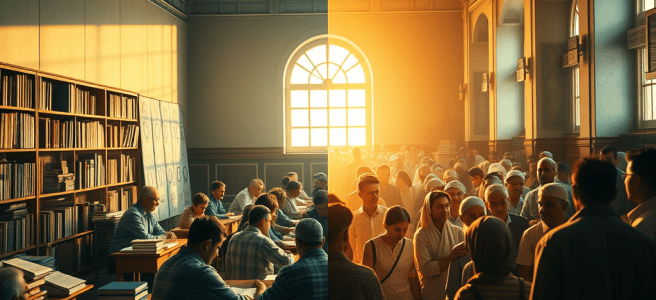
Paarshva (Year 12) Editor's note: Year 12 student Paarshva wrote this essay for entry into the annual John Locke Institute Global Essay Prize. Paarshva explores the debate between the political wisdom of the 'lettered'—those with formal education and theoretical knowledge—and the 'unlettered'—those with experiential, practical knowledge. It examines whether the collective judgment of the unlettered … Continue reading David Hume celebrated the wisdom of “unlettered men”. In a democracy, do the votes of unlettered men tend to protect a country against the bad ideas of the lettered or do the votes of the lettered tend to protect a country against the bad ideas of unlettered men?
David Hume celebrated the wisdom of “unlettered men”. In a democracy, do the votes of unlettered men tend to protect a country against the bad ideas of the lettered or do the votes of the lettered tend to protect a country against the bad ideas of unlettered men?

 The GSAL Journal